How to Choose a Replacement Door for Comfort, Security, and Curb Appeal in Greensboro, North Carolina
Key Takeaways
- Start with the problem the current door is causing, such as drafts, sticking, damage, poor privacy, or worn hardware.
- Compare fiberglass, steel, wood, and composite options based on maintenance needs, appearance, and weather exposure.
- Focus on the full entry system, since the frame, threshold, seals, and installation affect comfort and security.
- Choose glass, color, and hardware that complement the home’s architecture rather than following a short-lived trend.
- Request estimates that clearly separate the door unit, installation, repairs, finishing, and disposal.
In Greensboro, an exterior door must withstand humid summer days, wind-driven rain, changing temperatures, and the everyday use of a busy household. Choosing replacement doors is therefore about more than updating a front entry. The right choice should close securely, help limit drafts, provide the desired privacy, and fit the character of the home.
Whether the home is a brick ranch, a traditional two-story, or a newer neighborhood build, homeowners should assess the entire door system. That includes the slab, frame, threshold, weatherstripping, hinges, glass, locks, and surrounding trim. A good-looking door can still disappoint if these parts do not work together.
Why Homeowners Replace Exterior Doors
Exterior doors are often replaced because they no longer operate reliably. A door that drags across the threshold, needs force to latch, or lets in noticeable air can become frustrating every day. Damage from moisture, sun exposure, impacts, or age may also affect the door’s finish and structure.
Comfort is another practical reason. Gaps around an entry can make a foyer feel drafty during cooler weather and allow warm, humid outdoor air into the home during summer. Before replacing a unit, check whether a loose hinge, failed sweep, or flattened weatherstripping can be repaired. If the frame is deteriorated, out of square, or repeatedly causing problems, a complete replacement may be the better approach.
Homeowners planning a broader envelope upgrade may also want to evaluate exterior windows at the same time. Looking at adjacent openings together can make it easier to coordinate trim, finishes, glass styles, and air-sealing work.
Signs a Door May Need Replacement
A few simple observations can help distinguish a minor maintenance issue from a larger problem. Look for visible daylight around the perimeter when the door is closed, soft or swollen wood near the sill, cracked panels, rust spots, loose glass, or a threshold that has pulled away from the floor.
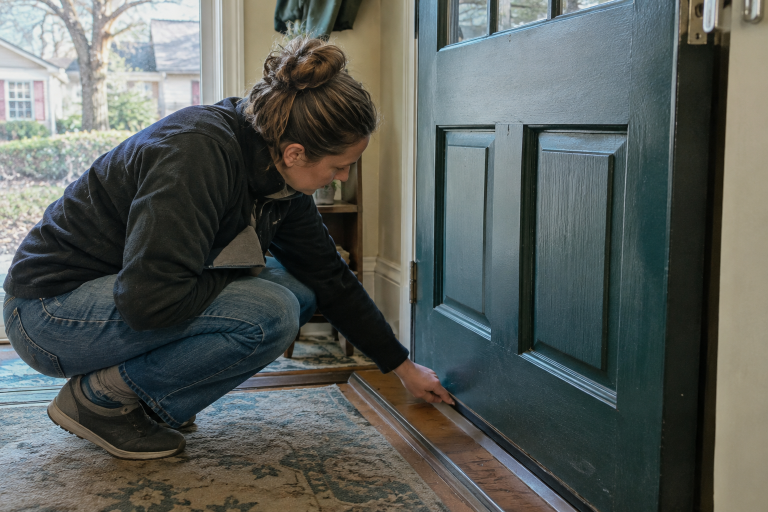
Also test the lock and latch. The door should close without lifting, pushing, or pulling it into position. If the latch misses the strike plate, the cause may be a loose hinge or seasonal movement. However, persistent misalignment, recurring drafts, or decay in the jamb may point to a failing door system.
Comparing Door Materials
Fiberglass Doors
Fiberglass is commonly selected for its versatility. Many models can mimic painted or stained wood grain while requiring less routine refinishing than natural wood. It is also less likely to dent than thin steel and is generally well suited to entries exposed to rain and changing weather.
Steel Doors
Steel doors can provide a strong, straightforward option, particularly for homeowners prioritizing security and value. Their finish should be inspected periodically, because deep scratches or chipped paint can expose metal to moisture. Smooth styles tend to create a clean, modern look, while embossed panels offer more traditional detail.
Wood and Composite Doors
Wood provides natural grain and architectural warmth, but it needs consistent sealing, staining, or painting to resist moisture and sunlight. A covered porch can reduce exposure to weather. Composite products vary by manufacturer, so compare construction, finish requirements, warranty terms, and expected upkeep before deciding.
Energy Performance and Comfort
Material alone does not determine efficiency. The insulated core, door frame, threshold, weatherstripping, glazing, and installation all influence how tightly the opening performs. The U.S. Department of Energy notes that visible gaps and loose-fitting exterior doors can indicate air leakage, and its guidance on weatherstripping an exterior door emphasizes a snug seal that still allows smooth operation.
For glass doors, review the product label rather than assuming all glass performs the same. ENERGY STAR explains that door criteria account for both the amount of glazing and independently certified performance ratings. When comparing options, consider the door’s exposure to afternoon sun, the desired amount of daylight, and the privacy needed at the entry.
Security Features to Consider
A secure entrance depends on more than a heavy door slab. The frame must be sound, hinges must be properly fastened, and the strike plate should be securely attached to solid framing. A quality deadbolt and correctly aligned latch are practical basics for nearly every exterior entry.
Textured or obscured glass can bring daylight into an entry while limiting outside views. Smart locks may add convenience for households that use keyless access, but they should supplement, not replace, strong physical hardware. Check battery requirements, manual key access, and compatibility with the household’s existing devices before choosing connected hardware.
Glass, Color, and Hardware Choices
Glass inserts, sidelights, and transoms can dramatically change an entryway. Clear glass maximizes visibility and light, while frosted, textured, or decorative glass can improve privacy. Consider where the entrance faces and how much direct sunlight it receives before selecting a large glazed area.
For color and finish, look at the home’s brick, siding, trim, roof, exterior lighting, and house numbers. A bold color can work well when it relates to the existing palette. Hardware should be easy to grip and operate first, then chosen in a finish that complements nearby fixtures.
Measurements and Installation Details
Accurate measurements prevent costly surprises. Measure opening width at the top, middle, and bottom, then measure height on both sides and through the center. Confirm jamb depth, door swing, hinge placement, lock location, sill condition, and whether the opening is level and square.
It is also important to understand whether the project involves only a door slab or a pre-hung unit with a new frame. Replacing the complete unit may be appropriate when the old frame has rot, damage, poor alignment, or ineffective seals. Installation details affect weather resistance, security, daily operation, and warranty coverage.
Budgeting and Questions to Ask
A realistic budget accounts for more than the door itself. Costs can vary depending on materials, glass, sidelights, hardware, new framing, threshold work, trim repairs, removal of the old unit, and painting or staining. Ask for a written scope that identifies what is included and what conditions could require additional repairs.
Before ordering, confirm whether the quote covers a slab or a complete system; which weatherstripping and threshold will be used; how nearby finishes will be protected; what maintenance the selected door material requires; and what the product and installation warranties cover. The best replacement door is one that fits the opening precisely, solves the current problem, and remains practical for Greensboro living long after installation day.