How to Compare Miami, Florida Neighborhoods Before Buying a Home
Key Takeaways
- A home’s daily usefulness can matter as much as its square footage and finishes.
- Review the exact property address for commute patterns, school information, flood exposure, and costs.
- Insurance, taxes, association fees, and repairs can substantially affect the monthly budget.
- Visiting at different times provides details that listing photos cannot show.
- A simple scorecard makes it easier to objectively compare several Miami options.
Buying in Miami, Florida means choosing more than a home style or bedroom count. Each address can shape your commute, storm preparation, monthly budget, and access to everyday essentials. Buyers who want a neighborhood-level perspective can consult South Miami real estate experts Team Citron, a full-service Miami real estate team led by Bea and Jenna Citron that provides home search, valuation, and neighborhood resources for areas including South Miami, Coral Gables, Pinecrest, Coconut Grove, and nearby communities. Their local focus is useful when comparing the practical differences between homes that may look similar online.
The best choice is rarely the neighborhood with the most buzz. It is the place that fits your household’s budget, schedule, risk tolerance, and plans for the next several years. Use this guide to compare properties by exact address before writing an offer.
1. Start With the Life You Want to Live
Before opening listing alerts, write down what a normal week should look like. Include work travel, school drop-offs, fitness, parks, dining, medical appointments, family visits, and the level of privacy you prefer. Then separate non-negotiables from preferences. A larger house farther from daily destinations may be right for one buyer, while another may value a smaller home near work and errands.
2. Test the Real Commute
Drive or ride the routes that will matter most, ideally during morning and afternoon peak periods. Check travel to work, school, child care, grocery stores, and medical care. In Miami, routes can feel very different depending on weather, school schedules, special events, construction, and bridge or expressway access. A buyer who cuts a 30-minute round-trip commute by choosing a closer home can reclaim meaningful time each week.
3. Check School Boundaries by Address
Do not assume that a neighborhood name determines school access. Search the exact address, then confirm current enrollment, transportation, program, and eligibility details directly with the relevant school district. The county’s Miami-Dade school search tools can help identify public schools near a given location, but proximity is not a guarantee of assignment. Families may also want to consider magnet options, private schools, preschools, and after-school care.
4. Review Flood Exposure and Storm Risk
A neighborhood’s general reputation is only a starting point. Evaluate the individual parcel, street, drainage conditions, elevation information, prior water concerns, and evacuation planning. Miami-Dade’s property and flood map layers allow buyers to locate an address and review available geographic information. Even a property outside a mapped high-risk area can still experience heavy-rain drainage or street-flooding issues, so ask questions during inspections and insurance review.

5. Price the Full Monthly Cost
The listing price is not the complete cost of ownership. Build a monthly estimate that includes:
- Mortgage principal and interest
- Property taxes and possible changes after a sale
- Homeowners and, when applicable, flood insurance
- HOA or condo association dues
- Utilities, maintenance, landscaping, pool care, and a repair reserve
Request insurance estimates for the exact address before the inspection period ends. Roof age, electrical systems, wind exposure, and building characteristics can affect underwriting and premiums.
6. Compare Property Types and Association Rules
Single-family homes can offer more control and privacy, but owners may be responsible for the roof, exterior, trees, drainage, pool, and seawall where applicable. Townhomes and condominiums can reduce certain exterior tasks, while adding shared rules, monthly dues, and association oversight. For an attached property, review the budget, reserves, recent meeting minutes, pending repairs, insurance information, and any current or proposed assessments.
7. Walk the Area at Different Times
Visit on a weekday morning, weekday evening, and weekend. Notice traffic flow, noise, parking, sidewalks, lighting, construction activity, and the activity of nearby businesses. Walk or drive to the places you expect to use regularly, including grocery stores, pharmacies, parks, and restaurants. Conversations with neighbors can add context, but one person’s experience should not be treated as the complete picture.
8. Study Resale Appeal Without Chasing Trends
Future resale is not guaranteed, but broad usefulness tends to matter. Consider access to employment centers, transportation routes, green space, shopping, and services, as well as the home’s condition and layout. Review comparable sales, current competing listings, days on market, and price reductions with attention to lot size, renovations, and micro-location. A less dramatic home in a convenient setting may appeal to more future buyers than a highly customized home with difficult access.
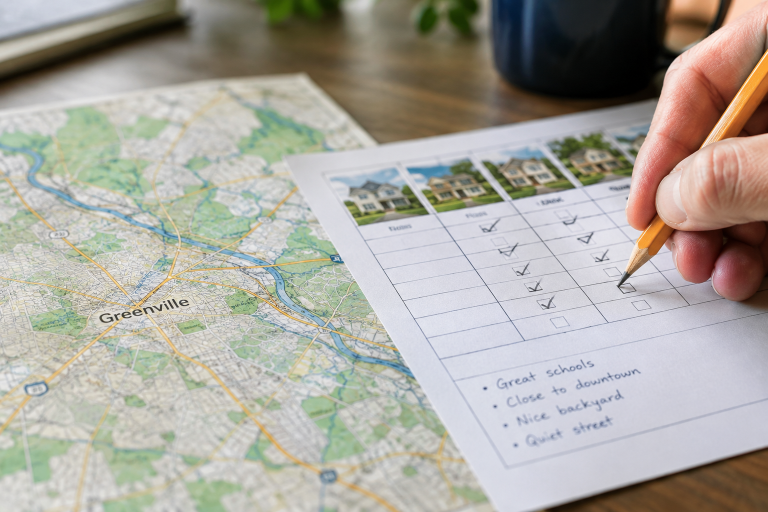
9. Build a Simple Neighborhood Scorecard
Score each home or neighborhood from one to five in the following categories:
- Commute and transportation
- School access and household needs
- Flood and storm considerations
- Insurance estimate and property condition
- Taxes, dues, and projected maintenance
- Errands, parks, dining, and daily convenience
- Noise, traffic, parking, and street feel
- Long-term resale appeal
The highest total is not automatically the best fit. Give greater weight to the categories that will most affect your life and budget.
10. Add a Local Market Check Before Making an Offer
Before deciding on price and terms, compare the property with recent sales and active competition. Look beyond the list price to consider condition, lot size, renovation quality, location, and time on the market. This step helps buyers distinguish between a home that is priced in line with nearby alternatives and one that needs a closer review of its value or future costs.
Common Questions Miami Buyers Ask
What should be checked first when comparing Miami neighborhoods?
Start with the daily routine, total monthly budget, commute, school needs, flood considerations, and the condition of the specific home.
Is a lower listing price always a better deal?
No. Insurance, repairs, taxes, association fees, and transportation costs can make a lower-priced property more expensive to own over time.
Should buyers visit a neighborhood more than once?
Yes. Traffic, parking, noise, weather, and nearby activity can vary considerably by day and time.
How important is resale value?
Resale matters even for long-term owners because jobs, family needs, finances, and personal plans can change. Focus on durable factors that make a home practical for a wider range of future buyers.
Conclusion
A Miami home search should measure more than finishes, views, and square footage. By checking the address, monthly costs, neighborhood rhythm, and property-specific risks, buyers can make a more informed decision before committing to an offer.